

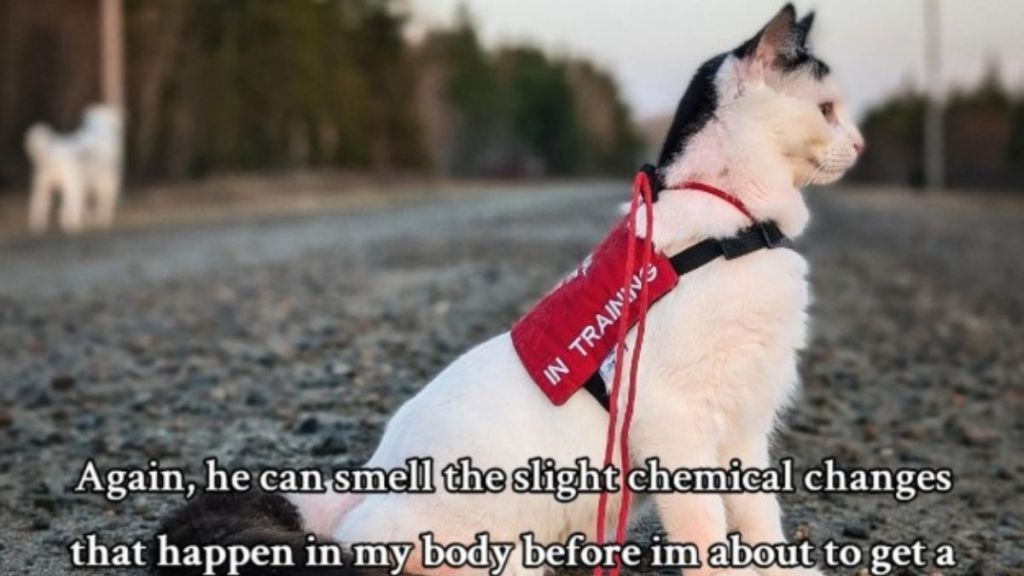
Anyka Breton uses a medical alert cat to detect her chronic migraines, which can be debilitating. Although migraines are somewhat common, affecting 12 to 15 percent of the worldwide population, only one to 2.2 percent suffer from chronic migraines. Women are more likely to suffer from the condition. While frequency diminishes as a person ages, symptoms rarely stop completely.
Videos by InspireMore
Lewis is a medical alert cat (in training) for cardiac and migraine alerts. Anyka posts frequent updates about his training, including tips on training cats and dogs. She also has a service dog, Ducky, who does tasks Lewis can’t do, such as item retrieval and crowd control. The two animals have different purposes, and work together to ensure Anyka’s safety and well-being.

Many people don’t understand that cats’ senses are as refined as dogs’. Although they might seem more challenging to train, cats can be trained in the same manner as dogs. Lewis can detect the onset of a migraine several hours before it hits. That allows Anyka time to take appropriate medications, rest, and ensure she is safe. Many times, these preemptive steps will help Anyka avoid the migraine altogether.

Lewis also guards against routine behaviors that result from PTSD, such as pacing, rocking, skin picking, and scratching. These behaviors can be excessive for Anyka, and Lewis can interrupt them. With bipolar disorder, Anyka is subject to “rage” episodes. The cat detects chemical changes within her brain when these are imminent and can halt the process.
Although cats are not classified as true service animals, having a medical alert cat can be beneficial. Anyka recommends training your cat if you have medical problems that would be lessened with an early alert.
Please share.
You can find the source of this story’s featured image here.
Want to be happier in just 5 minutes a day? Sign up for Morning Smile and join over 455,000+ people who start each day with good news.
